
On this page9 sections
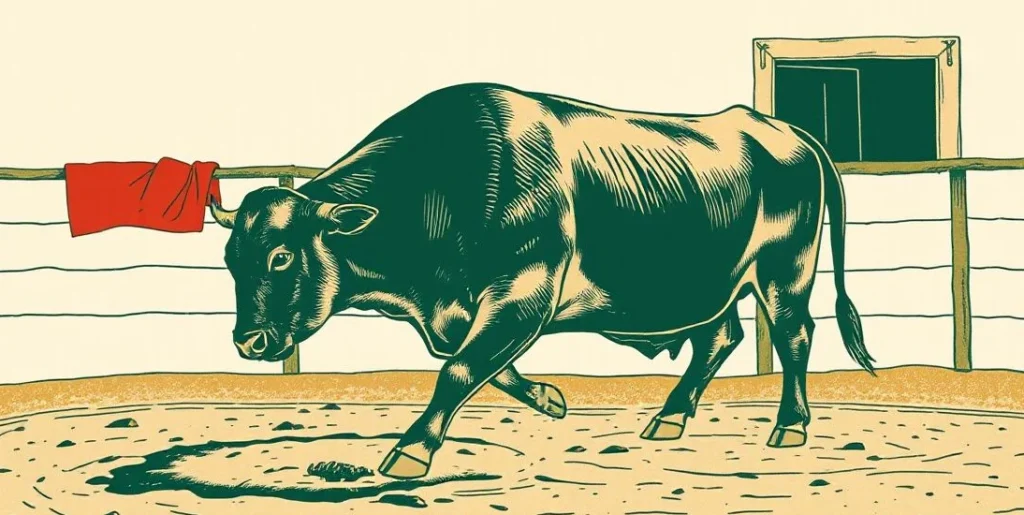
Idioms related to anger are particularly useful because they allow us to express a wide range of emotions, from mild annoyance to intense rage, in a colorful and evocative way.
Definition of Idioms for Anger
Idioms are expressions whose meanings cannot be understood from the literal meanings of the individual words. When it comes to anger, idioms provide a vivid and often humorous way to describe feelings of frustration, irritation, rage, and resentment. Anger idioms can range from mild expressions of annoyance to intense descriptions of uncontrollable fury. They are a vital part of everyday conversation and literature, adding color and emotional depth to our language.
Classification: Anger idioms can be classified based on the intensity of the emotion they convey (mild, moderate, intense), the context in which they are used (formal, informal), and the specific imagery they evoke (e.g., fire, animals, physical sensations). The function of these idioms is to express anger in a way that is more descriptive or impactful than simply saying “I am angry.”
Contexts: Anger idioms are used in a variety of contexts, including personal conversations, professional settings (though often indirectly), and creative writing. The choice of idiom will depend on the specific situation, the relationship between the speakers, and the desired level of intensity. For example, “to be ticked off” is less intense and more informal than “to fly off the handle.”
Structural Breakdown of Anger Idioms
The structure of anger idioms can vary widely. Some are based on verb phrases (e.g., blow a fuse), while others are based on similes or metaphors (e.g., as mad as a hornet). Understanding the underlying structure can help you remember and use these idioms more effectively.
Verb Phrases: Many anger idioms are built around verb phrases that describe a physical or emotional reaction. These phrases often involve action verbs and prepositions, such as “to hit the roof,” “to see red,” or “to foam at the mouth.” These idioms create a vivid image of someone experiencing intense anger.
Similes and Metaphors: Other anger idioms rely on similes (using “like” or “as”) or metaphors (direct comparisons) to express anger. Examples include “as mad as a wet hen,” “like a bull in a china shop,” or “a volcano about to erupt.” These idioms use figurative language to convey the intensity and potential destructiveness of anger.
Nominal Phrases: Some idioms use nominal phrases to describe a state of anger. Examples include “a fit of pique” or “slow burn.” These phrases often capture a more nuanced or specific form of anger, such as a sudden outburst or a gradual build-up of resentment.
Types and Categories of Anger Idioms
Anger idioms can be categorized based on the intensity and nature of the emotion they express. Here are some common categories:
- Intense Anger: Idioms that describe extreme rage or fury.
- Loss of Control: Idioms that suggest a person is no longer able to manage their anger.
- Mild Annoyance: Idioms that express slight irritation or frustration.
- Suppressed Anger: Idioms that describe anger that is held back or hidden.
- Retaliation: Idioms that suggest a desire for revenge or payback.
Intense Anger
These idioms describe a state of extreme rage, where someone is furious or incandescent.
Loss of Control
These idioms illustrate situations where someone’s anger overwhelms them, leading to irrational behavior.
Mild Annoyance
These idioms depict situations where someone is slightly irritated or bothered, but not intensely angry.
Suppressed Anger
These idioms capture the feeling of holding back anger, often leading to a slow build-up of resentment.
Retaliation
These idioms refer to actions taken to get even with someone who has caused anger or harm.
Examples of Idioms for Anger
Here are some examples of anger idioms, organized by category:
Idioms Describing Intense Anger (Boiling Point)
This section presents idioms that describe intense anger, often reaching a ‘boiling point’ where one is extremely furious and about to explode.
| Idiom | Meaning | Example Sentence |
|---|---|---|
| To blow a fuse | To become very angry and lose control. | When he saw the damage to his car, he blew a fuse. |
| To hit the roof | To become extremely angry. | My parents hit the roof when they found out I skipped school. |
| To see red | To become extremely angry. | He saw red when he realized someone had stolen his wallet. |
| To be livid | To be extremely angry. | She was livid when she found out about the betrayal. |
| To be hopping mad | To be extremely angry. | He was hopping mad after waiting in line for hours. |
| To foam at the mouth | To be enraged and ranting. | He was foaming at the mouth when he argued with the referee. |
| To be fit to be tied | To be extremely angry and agitated. | She was fit to be tied when she missed her flight. |
| To be in a rage | To be in a state of intense anger. | He was in a rage after losing the game. |
| To be up in arms | To be very angry and protesting. | The community was up in arms about the new development project. |
| To have a cow | To become very upset or angry. | My boss had a cow when I told him I was quitting. |
| To flip your lid | To lose control and become very angry. | He flipped his lid when he heard the news. |
| To go ballistic | To become extremely angry and irrational. | She went ballistic when she saw the mess in her kitchen. |
| To have a short fuse | To become angry very easily. | He has a short fuse, so be careful what you say to him. |
| To be on the warpath | To be very angry and looking for someone to blame. | The manager was on the warpath after the sales figures came out. |
| To breathe fire | To express extreme anger. | The coach was breathing fire after the team’s poor performance. |
| To explode with anger | To suddenly become very angry. | He exploded with anger when he heard the insult. |
| To go ape | To become extremely angry or excited. | The crowd went ape when the band came on stage. |
| To lose your cool | To become angry and lose composure. | He lost his cool and started shouting at the staff. |
| To be cheesed off | To be very annoyed or angry. | I was really cheesed off when they cancelled the meeting. |
| To be in high dudgeon | To be in a state of great anger or resentment. | She was in high dudgeon after being passed over for the promotion. |
| To fly off the handle | To suddenly become very angry. | He tends to fly off the handle over small things. |
| To go postal | To become extremely angry and violent (often humorous). | After hours of frustration, he joked he was going to go postal. |
| To blow a gasket | To suddenly become very angry. | My mom blew a gasket when I told her I had failed the exam. |
| To have a fit | To become very angry or upset, often loudly. | My grandmother had a fit when she saw muddy footprints all over her clean kitchen floor. |
| To go nuts | To become very angry (informal; it can also mean very excited). | The teacher went nuts when the students started throwing paper around the classroom. |
| To lose your rag | To lose your temper (informal, mainly British). | He lost his rag when the printer jammed for the third time that morning. |
| To be at boiling point | To be so angry that you are about to lose your temper. | After weeks of constant criticism, he was at boiling point. |
Idioms Describing Loss of Control
This section details idioms that describe the loss of control due to anger, where one’s emotions take over rational behavior.
| Idiom | Meaning | Example Sentence |
|---|---|---|
| To lose your temper | To become angry and unable to control your emotions. | He lost his temper and started yelling. |
| To fly into a rage | To suddenly become very angry. | She flew into a rage when she saw the mess. |
| To go off the deep end | To become extremely angry or irrational. | He went off the deep end when he found out about the affair. |
| To go bananas | To become very excited or angry. | The crowd went bananas when the singer appeared. |
| To freak out | To become very anxious, upset, or angry. | She freaked out when she saw the spider. |
| To snap | To suddenly lose control of your emotions. | He finally snapped under the pressure. |
| To lose it | To lose control of your emotions. | She lost it when she heard the bad news. |
| To flip out | To become very angry or excited. | He flipped out when he won the lottery. |
| To blow your top | To become extremely angry. | He blew his top when he saw the bill. |
| To get carried away | To lose control of your emotions and actions. | He got carried away and said things he later regretted. |
| To come unglued | To become very upset or lose emotional control. | She came unglued when she realized she had lost her passport. |
| To go to pieces | To become emotionally ভেঙ্গে and unable to cope. | He went to pieces after the death of his father. |
| To have a meltdown | To have an emotional outburst or breakdown. | She had a meltdown at work after a stressful week. |
| To reach the end of your rope | To reach the limit of your patience or endurance. | I’ve reached the end of my rope with his behavior. |
| To be at your wits’ end | To be so frustrated or stressed that you don’t know what to do. | I’m at my wits’ end trying to solve this problem. |
| To hit rock bottom | To reach the lowest point in a difficult situation. | After losing his job and his home, he felt like he had hit rock bottom. |
| To reach breaking point | To reach a point where you can no longer cope with stress or pressure. | She reached breaking point after months of overwork. |
| To be beside yourself | To be in an extreme state of emotion, often anger or worry. | She was beside herself with worry when her child went missing. |
| To be driven up the wall | To be extremely annoyed or frustrated. | The constant noise was driving me up the wall. |
| To be tearing your hair out | To be extremely frustrated or worried. | I was tearing my hair out trying to meet the deadline. |
| To rant and rave | To shout or speak angrily and wildly, usually for a long time. | He ranted and raved about the parking fine for the whole evening. |
| To go into a frenzy | To lose control in a burst of wild emotion, such as anger or excitement. | When the referee disallowed the late goal, the fans went into a frenzy, shouting and throwing cups onto the pitch. |
Idioms Describing Mild Annoyance
The following table includes idioms that convey mild annoyance, expressing slight irritation or frustration without intense anger.
| Idiom | Meaning | Example Sentence |
|---|---|---|
| To be ticked off | To be slightly annoyed or irritated. | I was ticked off when he didn’t show up on time. |
| To be peeved | To be annoyed or irritated. | She was peeved by the constant interruptions. |
| To be put out | To be annoyed or inconvenienced. | He seemed put out by the request. |
| To be miffed | To be slightly annoyed or offended. | She was miffed that she wasn’t invited. |
| To get under your skin | To annoy or irritate you. | His constant complaining really gets under my skin. |
| To rub someone the wrong way | To irritate or annoy someone. | He tends to rub people the wrong way with his arrogance. |
| To be a pain in the neck | To be annoying or troublesome. | Dealing with this paperwork is a real pain in the neck. |
| To be a thorn in someone’s side | To be a constant source of annoyance. | His constant criticism was a thorn in her side. |
| To get your goat | To annoy or irritate you. | His constant teasing really gets my goat. |
| To be fed up | To be annoyed or bored with something you have experienced for too long. | I’m fed up with his excuses. |
| To be browned off | To be annoyed or bored (British English). | I’m getting browned off with this weather. |
| To have had it up to here | To have reached the limit of your patience. | I’ve had it up to here with his lies. |
| To be cheesed off | To be annoyed or angry (British English). | I’m really cheesed off with this traffic. |
| To be a drag | To be annoying or boring. | Waiting in line is such a drag. |
| To get on your nerves | To annoy or irritate you. | His constant humming really gets on my nerves. |
| To ruffle feathers | To cause annoyance or disruption. | His comments ruffled a few feathers at the meeting. |
| To be nettled | To be slightly annoyed or irritated. | She was nettled by his rude remark. |
| To be out of sorts | To be slightly unwell or in a bad mood. | I’m feeling a bit out of sorts today. |
| To be disgruntled | To be displeased and discontented. | The employees were disgruntled with the new management policies. |
| To be aggravated | To be annoyed or exasperated. | I was aggravated by the slow service at the restaurant. |
| To be sick and tired of | To be completely fed up with something that has gone on too long. | I’m sick and tired of hearing the same old excuses. |
| To get someone’s back up | To annoy someone and make them defensive or hostile. | His condescending tone got my back up straight away. |
| To get someone’s dander up | To make someone angry or irritated (informal, somewhat old-fashioned). | His dismissive comments about her work really got her dander up. |
| To be in a huff | To be sulky and offended after feeling slighted. | She left the meeting in a huff after her suggestion was ignored. |
| To be riled up | To be angry or agitated after being provoked. | The crowd was riled up by the speaker’s inflammatory words. |
Idioms Describing Suppressed Anger
This section lists idioms that describe suppressed anger, where one is holding back their anger, often leading to hidden resentment or a slow burn.
| Idiom | Meaning | Example Sentence |
|---|---|---|
| To seethe with anger | To feel intense but suppressed anger. | He was seething with anger but tried to remain calm. |
| To simmer down | To gradually become less angry. | After a while, he started to simmer down. |
| To bottle up your anger | To suppress or hide your anger. | It’s not healthy to bottle up your anger; you need to express it. |
| To keep a lid on your anger | To control or suppress your anger. | He tried to keep a lid on his anger, but it was difficult. |
| To bite your tongue | To refrain from speaking out of anger or frustration. | I had to bite my tongue to avoid saying something I’d regret. |
| To swallow your pride | To suppress your feelings of anger or resentment. | He had to swallow his pride and apologize. |
| To hold your horses | To restrain your anger or impatience. | Hold your horses; let’s think this through before we react. |
| To keep your cool | To remain calm and composed, even when angry. | It’s important to keep your cool in a crisis. |
| To grit your teeth | To suppress anger or frustration by clenching your teeth. | She had to grit her teeth and endure the meeting. |
| To stew in your own juices | To be left to think about your anger or regret. | He was left to stew in his own juices after the argument. |
| To harbor a grudge | To hold onto feelings of anger or resentment for a long time. | She harbored a grudge against him for years. |
| To nurse a grievance | To dwell on a past wrong and feel resentful. | He nursed a grievance over the unfair treatment. |
| A slow burn | A gradual build-up of anger over time. | Their relationship was characterized by a slow burn of resentment. |
| To smolder with anger | To feel anger that is not openly expressed but is felt intensely. | He was smoldering with anger after the insult. |
| To keep something bottled up | To keep emotions or feelings hidden or suppressed. | She kept her feelings bottled up for years. |
| To bury the hatchet | To make peace and end a conflict. | They decided to bury the hatchet and move on. |
| To let sleeping dogs lie | To avoid stirring up trouble or conflict. | It’s best to let sleeping dogs lie and not bring up the past. |
| To turn the other cheek | To respond to an insult or injury without retaliating. | He decided to turn the other cheek and not respond to the criticism. |
| To hold back | To restrain yourself from expressing anger or emotion. | She wanted to shout, but she held back. |
| To simmer with resentment | To feel a deep, suppressed anger and bitterness. | He simmered with resentment over the perceived injustice. |
| To fume | To be very angry, sometimes without saying so. | She sat in the waiting room fuming as her appointment time came and went. |
| To brood over something | To keep thinking unhappily or resentfully about something. | He brooded over the argument all night instead of talking it through. |
| To let something fester | To leave anger or resentment unaddressed so that it grows worse over time. | It’s better to raise the problem now than to let it fester for months. |
| To stew over something | To keep thinking angrily or anxiously about something, usually on your own. | Instead of stewing over the unfair comments, she decided to talk to her manager. |
Idioms Describing Retaliation
The following table provides idioms that describe retaliation, referring to actions taken to get even with someone who has caused anger or harm.
| Idiom | Meaning | Example Sentence |
|---|---|---|
| To get even | To retaliate or seek revenge. | He was determined to get even with those who wronged him. |
| To get back at someone | To retaliate or seek revenge. | She wanted to get back at him for his betrayal. |
| To pay someone back in their own coin | To treat someone as they have treated you. | He decided to pay them back in their own coin. |
| To give someone a taste of their own medicine | To treat someone as they have treated you. | She gave him a taste of his own medicine by ignoring him. |
| To settle the score | To take revenge or get even. | He was determined to settle the score with his rivals. |
| To exact revenge | To take revenge in a deliberate and calculated way. | He plotted to exact revenge for the insult. |
| To have the last laugh | To be ultimately successful or vindicated after a period of adversity. | Despite the initial setbacks, he had the last laugh. |
| To turn the tables | To reverse a situation to your advantage. | She turned the tables on her opponent with a clever strategy. |
| To give someone what for | To scold or punish someone severely. | The teacher gave the student what for after he misbehaved. |
| To get your own back | To retaliate or seek revenge (British English). | He was planning to get his own back on them. |
| To even the score | To retaliate to balance things out. | He wanted to even the score after the unfair treatment. |
| To take revenge | To inflict harm in return for a wrong suffered. | He vowed to take revenge on those who hurt his family. |
| To wreak havoc | To cause widespread destruction or chaos as a form of retaliation. | The vandals wreaked havoc on the neighborhood. |
| To make someone pay | To make someone suffer for their actions. | He promised to make them pay for their crimes. |
| To pay the piper | To face the consequences of your actions. | Eventually, he had to pay the piper for his mistakes. |
| To return the favor | To do something in return, often with a negative connotation in this context. | He promised to return the favor for their betrayal. |
| To get your pound of flesh | To demand repayment or retribution, even if it causes suffering. | He was determined to get his pound of flesh. |
| To have the last word | To win an argument or conflict by having the final say. | She always had to have the last word in any discussion. |
| To settle accounts | To resolve a dispute or get even. | They met to settle accounts after years of conflict. |
| To get quits with someone | To get even or settle a score with someone. | He was determined to get quits with his rival. |
Saying Who or What You Are Angry With
Many everyday anger expressions depend on the right preposition: you are angry with or at a person, angry about a situation, and you take exception to a remark. These phrases are less colorful than the idioms above, but they are the ones you will need most often in ordinary conversation.
| Idiom | Meaning | Example Sentence |
|---|---|---|
| To be angry with / at someone | To feel anger toward a particular person; use “angry about” for a situation or event. | I was angry with myself for forgetting her birthday. |
| To be mad at someone | To be angry with someone (informal, mainly American). | She’s mad at her brother for borrowing her clothes without asking. |
| To be cross with someone | To be annoyed with someone (mainly British; usually milder than “angry”). | My mum was cross with me for coming home late. |
| To be sore about something | To feel annoyed or resentful about something (informal, mainly American). | He’s still sore about losing the final. |
| To have a bone to pick with someone | To have a complaint or disagreement you want to raise with someone. | I have a bone to pick with you about the bill you left me to pay. |
| To take exception to something | To object to something, usually because you find it offensive or unfair. | Several parents took exception to the principal’s remarks. |
Usage Rules for Anger Idioms
Using anger idioms correctly involves understanding their specific meanings and the contexts in which they are appropriate. Here are some general rules to follow:
- Know the Meaning: Make sure you understand the precise meaning of the idiom before using it. An idiom’s figurative meaning can be very different from its literal interpretation.
- Consider the Context: Choose idioms that are appropriate for the situation and your audience. Some idioms are informal and should not be used in professional settings.
- Be Aware of Intensity: Select idioms that match the level of anger you want to express. Using an idiom that is too strong or too mild can misrepresent your feelings.
- Pay Attention to Grammar: Use the idiom correctly in terms of grammar and sentence structure. Some idioms require specific verb tenses or prepositions.
- Avoid Overuse: Using too many idioms can make your speech sound unnatural or contrived. Use them sparingly and purposefully.
Common Mistakes with Anger Idioms
Here are some common mistakes to avoid when using anger idioms:
| Incorrect | Correct | Explanation |
|---|---|---|
| He hit the ceiling when he heard the news. | He hit the roof when he heard the news. | “Hit the roof” is the correct idiom, not “hit the ceiling.” |
| She was as mad as a wet chicken. | She was as mad as a wet hen. | “Hen” is the correct term in the idiom, not “chicken.” |
| He saw blue when he realized his mistake. | He saw red when he realized his mistake. | “See red” is the idiom for anger, not “see blue.” |
| I’m fit to be tied up. | I’m fit to be tied. | The idiom is “fit to be tied,” not “fit to be tied up.” |
| He has a long fuse. | He has a short fuse. | A “short fuse” means someone gets angry easily, not a “long fuse.” |
| She was boiling under the collar. | She was hot under the collar. | The correct idiom is “hot under the collar”, indicating agitation. |
| He was on a war paint. | He was on the warpath. | The phrase “on the warpath” refers to being angry and seeking confrontation. |
| She flew off the handle bar. | She flew off the handle. | “Flew off the handle” means to suddenly become very angry. |
Practice Exercises
Test your understanding of anger idioms with these exercises:
Exercise 1: Fill in the Blanks
Complete the following sentences with the correct anger idiom from the list below.
(blow a fuse, hit the roof, see red, hopping mad, fit to be tied, get under my skin, pain in the neck, short fuse, on the warpath, bite my tongue)
| Question | Answer |
|---|---|
| 1. When I saw the damage to my car, I almost __________. | blow a fuse |
| 2. My parents will __________ when they find out I failed the exam. | hit the roof |
| 3. He __________ when he saw someone cutting in line. | saw red |
| 4. I was __________ after waiting for hours in the rain. | hopping mad |
| 5. She was __________ when she missed her train. | fit to be tied |
| 6. His constant complaining really __________. | gets under my skin |
| 7. Dealing with this paperwork is a real __________. | pain in the neck |
| 8. He has a __________, so be careful what you say. | short fuse |
| 9. The boss is __________ after the sales figures came out. | on the warpath |
| 10. I had to __________ to avoid saying something rude. | bite my tongue |
Exercise 2: Matching
Match the idiom with its correct meaning.
| Idiom | Meaning | Answer |
|---|---|---|
| 1. To lose your temper | a. To be slightly annoyed | 1-b |
| 2. To be ticked off | b. To become angry and unable to control emotions | 2-a |
| 3. To have a cow | c. To suppress your anger | 3-e |
| 4. To keep your cool | d. To be extremely angry | 4-f |
| 5. To bite your tongue | e. To become very upset or angry | 5-c |
| 6. To be livid | f. To remain calm when angry | 6-d |
Exercise 3: True or False
Determine whether the following statements are true or false.
| Statement | Answer |
|---|---|
| 1. “To see green” means to become extremely angry. | False (To see red) |
| 2. “To blow a fuse” means to become very angry and lose control. | True |
| 3. “To be miffed” means to be extremely angry. | False (To be slightly annoyed) |
| 4. “To keep a lid on your anger” means to suppress your anger. | True |
| 5. “To get even” means to forgive and forget. | False (To retaliate) |
| 6. “To simmer down” means to become more angry. | False (To become less angry) |
| 7. “To be cheesed off” is a British expression for being annoyed. | True |
| 8. “To go postal” means to send a letter. | False (To become extremely angry and violent) |
| 9. “To be driven up the wall” means to be extremely annoyed or frustrated. | True |
| 10. “To bury the hatchet” means to cause more conflict. | False (To make peace) |
Advanced Topics in Anger Idioms
Consider these more complex aspects of anger idioms:
- Cultural Variations: Anger idioms can vary significantly across different cultures and regions. Some idioms may be unique to specific dialects or social groups.
- Historical Origins: Understanding the historical origins of anger idioms can provide deeper insights into their meanings and usage.
- Figurative Language: Analyze the types of figurative language used in anger idioms (e.g., metaphor, simile, hyperbole) and how they contribute to the overall effect.
- Subtleties of Meaning: Explore the subtle differences in meaning between similar anger idioms and how to choose the most appropriate one for a given context.
- Creative Use: Experiment with using anger idioms in creative writing and speech to add color and emotional depth to your communication.
Frequently Asked Questions
Here are some frequently asked questions about anger idioms:
- What is the difference between an idiom and a metaphor?
An idiom is a phrase whose meaning is not predictable from the usual meanings of its constituent elements. A metaphor is a figure of speech that directly compares two unlike things, often without using “like
” or “as,” to suggest a resemblance. While some idioms can be metaphorical, not all idioms are metaphors. - How can I improve my understanding of idioms?
To improve your understanding of idioms, read widely, listen to native speakers, and make a note of any new idioms you encounter. Practice using the idioms in your own speech and writing to reinforce your learning.
- Are idioms universal across languages?
No, idioms are not universal. Each language has its own unique set of idioms that reflect its culture and history. It is important to learn the idioms specific to the language you are studying.
- Can idioms be used in formal writing?
While idioms are more common in informal speech and writing, some idioms can be appropriate in formal contexts. Choose idioms carefully, considering your audience and the tone of your writing.
- Is it okay to mix idioms?
Mixing idioms (e.g., “hitting two birds with one stone’s throw”) is generally not recommended, as it can sound awkward or confusing. It’s best to use idioms correctly and consistently.