
On this page9 sections
- Definition of Idioms About Fake Friends
- Structural Breakdown of Idioms
- Types and Categories of Idioms About Fake Friends
- Examples of Idioms About Fake Friends
- Usage Rules for Idioms About Fake Friends
- Common Mistakes When Using Idioms About Fake Friends
- Practice Exercises
- Advanced Topics: Nuances and Variations
- FAQ
Understanding idioms is a critical aspect of mastering the English language, allowing for nuanced comprehension and effective communication. Idioms about fake friends are particularly important because they highlight subtle social dynamics and provide insight into identifying insincere relationships.
Definition of Idioms About Fake Friends
Idioms are expressions whose meanings cannot be understood from the literal meanings of the individual words. They are a type of figurative language that adds color and depth to communication. Idioms about fake friends are phrases that describe individuals who appear to be supportive and loyal but are, in reality, disingenuous, treacherous, or unreliable. These idioms often employ metaphors and similes to convey the hidden nature of the false friend, painting a vivid picture of their deceitful behavior.
These idioms function to express feelings of betrayal, distrust, and disillusionment. They allow speakers to communicate complex social realities in a concise and impactful manner. The context in which these idioms are used is crucial, as misinterpretations can lead to misunderstandings. These idioms are found throughout English literature, conversations, and media, reflecting their importance in describing interpersonal relationships.
Structural Breakdown of Idioms
Idioms, by their nature, defy a rigid grammatical structure. However, understanding their components can aid in comprehension. Most idioms are phrasal, meaning they consist of multiple words that function as a single unit. The structure often involves a verb and a preposition (e.g., stab in the back), or a noun phrase with a descriptive adjective (e.g., fair-weather friend). The overall meaning is figurative and not directly derived from the individual words.
The grammatical function of an idiom varies depending on its structure. Some idioms act as nouns (e.g., snake in the grass), others as verbs (e.g., backstab), and some as adjectives (e.g., two-faced). Recognizing the grammatical role of an idiom in a sentence is essential for correct usage. The structural flexibility of idioms allows them to be incorporated into various sentence patterns, enhancing the expressiveness of the language.
Types and Categories of Idioms About Fake Friends
Idioms describing fake friends can be categorized based on the specific type of betrayal or insincerity they convey. Here are some common categories:
Idioms Describing Backstabbers
These idioms refer to someone who betrays your trust, often by speaking negatively about you behind your back or undermining your efforts secretly. These idioms emphasize the act of betrayal and the hidden nature of the attack.
Idioms Describing Two-Faced Individuals
These idioms describe someone who presents one face to you and another to others, often being friendly to your face but speaking ill of you when you’re not around. This category highlights the hypocrisy and duplicity of the person.
Idioms Describing Fair-Weather Friends
These idioms refer to someone who is only a friend when things are going well but abandons you during difficult times. These idioms emphasize the lack of commitment and support during hardship.
Idioms Describing a Snake in the Grass
These idioms describe someone who is deceitful and dangerous, pretending to be harmless but secretly plotting against you. This category highlights the hidden danger and treachery of the individual.
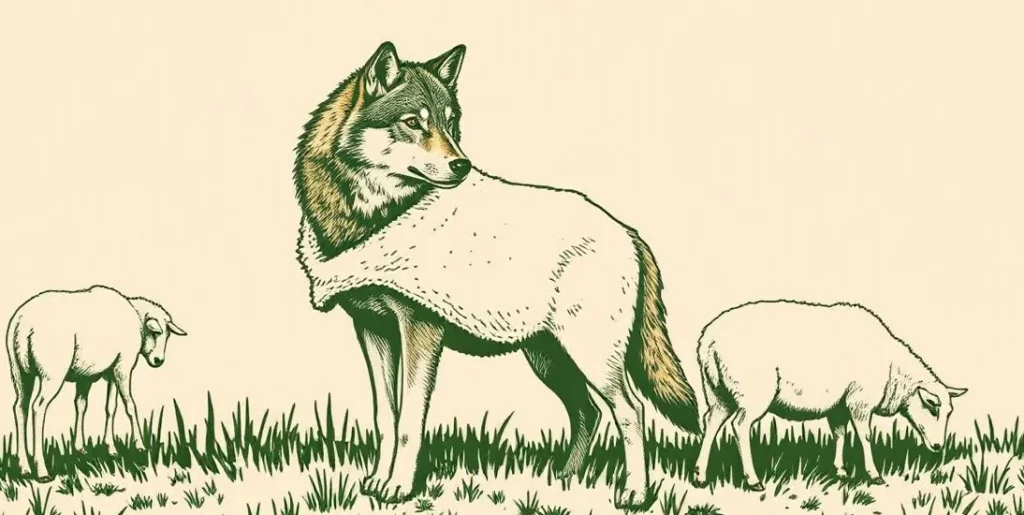
Idioms Describing a Wolf in Sheep’s Clothing
Similar to “snake in the grass,” this idiom describes someone who appears harmless or friendly but is actually dangerous or malicious. It emphasizes the deceptive appearance and the underlying threat.
Examples of Idioms About Fake Friends
The following sections provide detailed examples of each category of idioms, illustrating their usage in context. The tables include example sentences that demonstrate how these idioms are used in everyday conversations and writing.
Backstabber Idioms Examples
These idioms highlight the act of betrayal and the subtle ways in which a fake friend can undermine you. Notice how the examples below convey the pain and shock of being betrayed by someone trusted.
| Idiom | Meaning | Example Sentence |
|---|---|---|
| Stab in the back | To betray someone’s trust | I thought he was my friend, but he stabbed me in the back by telling my boss about my personal problems. |
| Behind someone’s back | Doing something secretively and often maliciously | She was talking behind my back, spreading rumors about my performance at work. |
| Two-time | To be unfaithful or betray someone | I can’t believe he would two-time his best friend like that; it’s completely dishonorable. |
| Sell someone down the river | To betray someone for personal gain | He sold his colleague down the river to get a promotion. |
| Pull the rug out from under someone | To suddenly withdraw support or assistance | Just when I thought I was succeeding, he pulled the rug out from under me by cancelling the project. |
| Stick a knife in someone’s back | To betray someone in a hurtful way | She stuck a knife in his back when she revealed his secret to everyone. |
| Leave someone high and dry | To abandon someone in a difficult situation | When the project failed, he left me high and dry to take the blame. |
| Throw someone under the bus | To sacrifice someone to save oneself | The manager threw his employee under the bus to avoid responsibility for the mistake. |
| Betray someone’s trust | To violate someone’s confidence | He betrayed her trust by sharing her personal information with others. |
| Double-cross | To deceive or betray someone | I can’t believe he would double-cross us after we helped him so much. |
| Play someone false | To be disloyal or untrue to someone | She played him false by pretending to support his ideas while secretly undermining them. |
| Backstab | To betray or undermine someone, especially secretly | He backstabbed me by going to the boss and complaining about my work ethic, even though I had helped him countless times. |
| Undermine | To weaken or sabotage someone’s efforts or position | She was always trying to undermine my authority in the team by questioning my decisions in front of everyone. |
| Sabotage | To deliberately destroy or damage something, or to spoil someone’s plans | He tried to sabotage my presentation by hiding the projector, hoping I would fail. |
| Bury the hatchet (ironically) | To pretend to make peace while still harboring resentment | They claimed to have buried the hatchet, but I could still sense the tension between them. |
| Sink the knife in | To inflict further pain or damage after an initial betrayal | After he lost his job, his so-called friend sank the knife in by telling him how much better he was doing. |
| Go behind someone’s back | To act secretly and often negatively without someone’s knowledge | She went behind my back and applied for the same promotion I was seeking, even though we had discussed it. |
| Put the boot in | To take advantage of someone when they are vulnerable | He put the boot in when he knew I was struggling, making my situation even worse. |
| Snake around | To behave in a deceitful or underhanded way | He was always snaking around, trying to find out my secrets so he could use them against me. |
| Do a Judas | To betray someone, like Judas Iscariot betrayed Jesus | I felt like he did a Judas on me when he revealed my confidential information to our competitors. |
Two-Faced Idioms Examples
These idioms describe individuals who present a false image, often being friendly to your face but harboring negative feelings or intentions. The examples below illustrate the confusion and hurt caused by such duplicity.
| Idiom | Meaning | Example Sentence |
|---|---|---|
| Two-faced | Hypocritical or insincere | I can’t stand her; she’s so two-faced, always saying nice things to my face but gossiping about me behind my back. |
| Double-dealer | Someone who deceives and betrays others | He turned out to be a double-dealer, pretending to be our ally while secretly working against us. |
| Wear a mask | To hide one’s true feelings or intentions | She always wears a mask, so it’s hard to know what she really thinks. |
| Speak with a forked tongue | To say one thing and mean another | I don’t trust anything he says; he speaks with a forked tongue. |
| Play both sides | To support opposing sides in a conflict | He’s playing both sides to ensure he comes out on top no matter what happens. |
| Have a hidden agenda | To have a secret plan or motive | I suspect she has a hidden agenda because she’s being too nice to be genuine. |
| Janus-faced | Having two contrasting aspects or characteristics | His Janus-faced behavior made it impossible to trust him; he was kind one moment and cruel the next. |
| Act like Jekyll and Hyde | To have a dual personality, one good and one evil | She acts like Jekyll and Hyde; one minute she’s sweet, and the next she’s a monster. |
| Deceptive | Giving an appearance or impression different from the true one; misleading. | His deceptive charm hid his true intentions, and we all fell for it. |
| Insincere | Not expressing genuine feelings | Her compliments felt insincere, as if she didn’t really mean what she was saying. |
| Duplicitous | Deceitful | His duplicitous nature made it hard to trust anything he said. |
| Putting on an act | To behave in a way that is not genuine | I could tell he was just putting on an act to impress the boss. |
| Feigning friendship | Pretending to be friendly | She was just feigning friendship to get closer to my connections. |
| Wearing a false face | Hiding one’s true emotions or intentions | He was wearing a false face, pretending to be happy while secretly plotting against us. |
| Putting up a front | Creating a deceptive appearance | They were putting up a front of happiness, but I knew their marriage was falling apart. |
| Hiding their true colors | Concealing one’s true nature | She was hiding her true colors until she got what she wanted. |
| Playing a part | Acting in a way that is not genuine | He was just playing a part to gain our sympathy. |
| Masking their intentions | Concealing one’s true plans or purposes | They were masking their intentions with false promises. |
| Camouflaging their motives | Disguising one’s true reasons | He was camouflaging his motives by pretending to be helpful. |
| Putting on a show | Behaving in a way that is intended to impress or deceive others | They were just putting on a show for the cameras. |
Fair-Weather Friend Idioms Examples
These idioms describe individuals who are only around when things are good but disappear when you need them most. The examples below illustrate the disappointment and loneliness that come with realizing someone is not a true friend.
| Idiom | Meaning | Example Sentence |
|---|---|---|
| Fair-weather friend | Someone who is only a friend when things are going well | I thought he was a true friend, but he turned out to be just a fair-weather friend. |
| Jump ship | To abandon a cause or situation when it becomes difficult | When the company started losing money, many employees jumped ship. |
| Desert someone in their hour of need | To abandon someone when they need help the most | He deserted me in my hour of need, leaving me to face the problem alone. |
| Leave someone in the lurch | To abandon someone in a difficult situation | She left me in the lurch when she quit the project without warning. |
| Bail on someone | To abandon or leave someone | He bailed on me at the last minute, leaving me to do all the work myself. |
| Nowhere to be found | Absent when needed | When I needed help moving, he was nowhere to be found. |
| Vanish into thin air | To disappear completely | As soon as I started having problems, she vanished into thin air. |
| Absent without leave | To be absent without permission or justification | He was absent without leave during the crisis. |
| Missing in action | Absent and unaccounted for, especially during a difficult situation | When the going got tough, he was missing in action. |
| Only there for the good times | Present only when things are enjoyable | She’s only there for the good times; she disappears when there’s trouble. |
| Friend in need is a friend indeed (ironically) | Used ironically to point out someone who is not a true friend | He always says ‘a friend in need is a friend indeed,’ but he’s never around when I need him. What a friend in need is a friend indeed! |
| Disappear when the chips are down | To vanish when things get difficult | He tends to disappear when the chips are down, so I don’t rely on him for support. |
| Run for the hills | To escape from a difficult situation | As soon as the project started facing challenges, he ran for the hills. |
| Cut and run | To abandon a difficult situation quickly | When the scandal broke, he decided to cut and run, leaving everyone else to deal with the fallout. |
| Leave someone to fend for themselves | To abandon someone to handle a situation alone | They left me to fend for myself when I needed their help the most. |
| Not lift a finger | To do nothing to help someone | He didn’t lift a finger to assist me, even though he knew I was struggling. |
| Turn their back on someone | To refuse to help someone in need | They turned their back on me when I asked for their support. |
| Leave someone holding the bag | To leave someone to take the blame or responsibility | He left me holding the bag when he skipped town. |
| Abandon ship | To leave a place or situation that is likely to fail | When the business started failing, he decided to abandon ship. |
| Nowhere to be seen | Not present when needed | During the crisis, he was nowhere to be seen. |
Snake in the Grass Idioms Examples
These idioms describe someone who is deceitful and dangerous, often hiding their true intentions behind a facade of friendliness. The examples below illustrate the danger and betrayal associated with such individuals.
| Idiom | Meaning | Example Sentence |
|---|---|---|
| Snake in the grass | A deceitful and dangerous person | I always suspected he was a snake in the grass, and I was right when he betrayed me. |
| Wolf in sheep’s clothing | Someone who appears harmless but is actually dangerous | She seemed so nice at first, but she turned out to be a wolf in sheep’s clothing. |
| Backstabber | Someone who betrays your trust | He’s a real backstabber; you can’t trust him with anything. |
| Deceiver | Someone who deceives others | He is a master deceiver, always manipulating people to get what he wants. |
| Traitor | Someone who betrays their country or a cause | He was labeled a traitor after he revealed confidential information to the enemy. |
| Fifth columnist | A person who secretly undermines a group or nation | They suspected he was a fifth columnist working to sabotage their efforts from within. |
| False friend | Someone who pretends to be a friend but is not | I realized he was a false friend when he started spreading rumors about me. |
| Double-crosser | Someone who betrays someone else | He is a notorious double-crosser, always looking for an opportunity to betray someone. |
| Judas | Someone who betrays a friend | He acted like a Judas when he betrayed his best friend for money. |
| Betrayer | Someone who betrays | He will always be remembered as the betrayer who sold out his own team. |
| Serpent in disguise | Someone who appears harmless but is dangerous | Beware of him; he’s a serpent in disguise, waiting for the right moment to strike. |
| Venomous friend | A friend who is harmful or poisonous | She proved to be a venomous friend, poisoning our relationship with her lies. |
| Two-faced enemy | An enemy who pretends to be a friend | I realized he was a two-faced enemy when he sabotaged my career. |
| Treacherous ally | An ally who is disloyal | He was a treacherous ally, always undermining our plans. |
| Deceptive companion | A companion who deceives | She turned out to be a deceptive companion, leading us into a trap. |
| Underhanded individual | Someone who behaves in a secretive and dishonest way | He’s an underhanded individual, always plotting behind the scenes. |
| Sly character | A cunning and deceitful person | She’s a sly character, always trying to manipulate people. |
| Calculating friend | A friend who is always thinking about their own advantage | He’s a calculating friend, always looking for ways to benefit from our relationship. |
| Scheming acquaintance | An acquaintance who is always plotting something | She’s a scheming acquaintance, always trying to stir up trouble. |
| Cunning deceiver | Someone who is skilled at deceiving others | He’s a cunning deceiver, always managing to get away with his lies. |
Wolf in Sheep’s Clothing Idioms Examples
These idioms describe someone who appears harmless or friendly but is actually dangerous or malicious. The examples below illustrate the deceptive nature of such individuals and the potential harm they can cause.
| Idiom | Meaning | Example Sentence |
|---|---|---|
| Wolf in sheep’s clothing | Someone who appears harmless but is actually dangerous | Be careful of him; he’s a wolf in sheep’s clothing, pretending to be your friend while plotting against you. |
| A Trojan horse | Something that appears harmless but carries a threat | The new software was a Trojan horse, secretly installing malware on our computers. |
| Serpent in disguise | A hidden danger or enemy | She seemed kind, but she was a serpent in disguise, waiting for the right moment to strike. |
| Hidden enemy | An enemy that is not easily recognized | The biggest threat came from a hidden enemy within our own ranks. |
| Enemy in disguise | An enemy who pretends to be a friend | He was an enemy in disguise, always pretending to support us while secretly working against us. |
| False prophet | Someone who falsely claims to have divine inspiration | He was a false prophet, leading his followers astray with his deceptive teachings. |
| Deceptive facade | A misleading appearance | Behind the deceptive facade of success, the company was struggling to survive. |
| Beneath the surface | The hidden reality | Beneath the surface of his charming personality lay a ruthless ambition. |
| Feigned innocence | Pretended lack of guilt or knowledge | His feigned innocence didn’t fool anyone; we knew he was responsible. |
| Masked intentions | Hidden plans or purposes | Her masked intentions were finally revealed when she betrayed us. |
| Underlying motives | The real reasons behind someone’s actions | We need to understand his underlying motives before we can trust him. |
| Apparent kindness | Seeming gentleness or goodwill | His apparent kindness was just a way to manipulate us. |
| False pretense | A deceptive claim or excuse | Under the false pretense of helping, he was actually stealing from us. |
| Smiling assassin | Someone who appears friendly but is dangerous | She was a smiling assassin, charming everyone while secretly plotting their downfall. |
| Inward malice | Hidden ill will or spite | Despite his friendly exterior, he harbored inward malice towards everyone. |
| Deceptive appearance | A misleading outward show | His deceptive appearance hid his true nature. |
| Hidden agenda | A secret plan or motive | She always had a hidden agenda behind her friendly gestures. |
| False front | A deceptive outward show | He put up a false front to hide his true feelings. |
| Underlying treachery | Hidden betrayal | There was always an underlying treachery in his actions. |
| Camouflaged danger | Danger that is disguised | The situation presented a camouflaged danger that we didn’t recognize until it was too late. |
Usage Rules for Idioms About Fake Friends
Using idioms correctly requires understanding their specific meanings and nuances. Here are some general rules to follow:
- Context is Key: Ensure the context is appropriate for the idiom. Using an idiom in the wrong context can lead to confusion or misinterpretation.
- Grammatical Correctness: While idioms themselves are fixed expressions, they must be used grammatically within a sentence. Pay attention to verb tenses and subject-verb agreement.
- Audience Awareness: Consider your audience. Some idioms may not be familiar to non-native speakers or younger audiences.
- Avoid Overuse: Using too many idioms can make your writing or speech sound unnatural or contrived.
- Understand the Connotation: Be aware of the emotional tone or connotation of the idiom. Some idioms are more formal or informal than others.
For example, saying “He is a snake in the grass” implies a strong sense of betrayal and danger. Using this idiom lightly or in a humorous context would be inappropriate. Similarly, ensure the verb tense matches the context. Instead of saying “He will stab me in the back,” you might say “He stabbed me in the back” if the betrayal has already occurred.
Common Mistakes When Using Idioms About Fake Friends
Here are some common mistakes to avoid when using idioms about fake friends:
| Incorrect | Correct | Explanation |
|---|---|---|
| He stabbed me on the back. | He stabbed me in the back. | The correct preposition is “in,” not “on.” |
| She is a weather-fair friend. | She is a fair-weather friend. | The correct order of the words is “fair-weather.” |
| They are talking behind to my back. | They are talking behind my back. | The correct preposition is “behind,” and the possessive pronoun “my” is needed. |
| He sold me down the river for his gain. | He sold me down the river to get a promotion. | The idiom usually implies a personal gain as the reason for the betrayal. |
| She pulled the carpet from under me. | She pulled the rug out from under me. | The idiom uses “rug,” not “carpet.” |
| He left me high on dry. | He left me high and dry. | The correct phrase is “high and dry.” |
| She is a wolf with sheep’s clothing. | She is a wolf in sheep’s clothing. | The correct preposition is “in,” not “with.” |
| He jumped the boat when things got tough. | He jumped ship when things got tough. | The correct word is “ship,” not “boat.” |
| They deserted me in the hour of need. | They deserted me in my hour of need. | The possessive pronoun “my” is needed to specify whose hour of need it is. |
| He is speaking with a fork tongue. | He is speaking with a forked tongue. | The correct adjective is “forked,” not “fork.” |
By avoiding these common mistakes, you can use idioms about fake friends more accurately and effectively.
Practice Exercises
Test your understanding of idioms about fake friends with these exercises.
Exercise 1: Fill in the Blanks
Complete the following sentences with the correct idiom from the list below:
(stabbed me in the back, fair-weather friend, two-faced, snake in the grass, sold me down the river)
| Question | Answer |
|---|---|
| 1. I can’t believe he ________ by revealing my secrets to our competitor. | stabbed me in the back |
| 2. She turned out to be a ________, only calling when she needed something. | fair-weather friend |
| 3. He’s so ________; he says one thing to my face and another behind my back. | two-faced |
| 4. I should have known he was a ________; he was always so secretive and sly. | snake in the grass |
| 5. The manager ________ to save his own job, even though it cost me mine. | sold me down the river |
| 6. He was a true ________; I confided in him, and he betrayed my trust. | snake in the grass |
| 7. I thought she was my friend, but she ________ when she spread rumors about me. | stabbed me in the back |
| 8. You can’t rely on him; he’s a ________ who will disappear when you need him most. | fair-weather friend |
| 9. She’s been so ________ lately, complimenting my work but then criticizing it to others. | two-faced |
| 10. He ________ when he told the boss about my mistake to make himself look better. | stabbed me in the back |
Exercise 2: Matching Idioms to Meanings
Match the idiom on the left with its correct meaning on the right:
| Idiom | Meaning |
|---|---|
| 1. Wolf in sheep’s clothing | a. To abandon someone in a difficult situation |
| 2. Leave someone in the lurch | b. Someone who is only a friend when things are going well |
| 3. Jump ship | c. Someone who appears harmless but is actually dangerous |
| 4. Fair-weather friend | d. To betray someone’s trust, often secretly |
| 5. Stab in the back | e. To abandon a cause or situation when it becomes difficult |
Answers:
| Question | Answer |
|---|---|
| 1. Wolf in sheep’s clothing | c. Someone who appears harmless but is actually dangerous |
| 2. Leave someone in the lurch | a. To abandon someone in a difficult situation |
| 3. Jump ship | e. To abandon a cause or situation when it becomes difficult |
| 4. Fair-weather friend | b. Someone who is only a friend when things are going well |
| 5. Stab in the back | d. To betray someone’s trust, often secretly |
Exercise 3: Sentence Completion
Complete the following sentences using an appropriate idiom about fake friends.
| Question | Answer |
|---|---|
| 1. After all the help I gave him, he ________ when he took credit for my work. | stabbed me in the back |
| 2. I thought I could count on her, but she proved to be a ________ when I lost my job. | fair-weather friend |
| 3. I don’t trust him; he’s always ________, saying one thing and doing another. | speaking with a forked tongue |
| 4. Be careful of her; she seems nice, but she’s a ________ waiting for the right moment to strike. | snake in the grass |
| 5. They ________ when they left me to deal with the consequences of their actions. | left me in the lurch |
Advanced Topics: Nuances and Variations
Beyond the basic understanding and usage of idioms about fake friends, there are nuances and variations that can further enrich your understanding. These include:
- Regional Variations: Some idioms may be more common in certain regions or dialects of English.
- Historical Context: Understanding the historical origins of an idiom can provide deeper insight into its meaning and usage.
- Subtle Differences: Some idioms may have subtle differences in meaning or connotation. For example, “snake in the grass” implies a hidden danger, while “two-faced” emphasizes hypocrisy.
- Creative Adaptations: Skilled writers and speakers may creatively adapt idioms to fit specific situations, adding layers of meaning and impact.
Exploring these advanced topics can help you develop a more sophisticated understanding of the English language and its capacity for nuanced expression. For example, researching the origin of “sell someone down the river” reveals its roots in the history of slavery in the United States, where enslaved people were literally sold to plantations further down the Mississippi River, often resulting in harsher conditions. This historical context adds a deeper layer of meaning to the idiom.
FAQ: Frequently Asked Questions
-
What is the difference between an idiom and a proverb?
-
An idiom is a phrase whose meaning is not predictable from the usual meanings of its constituent elements (e.g., “kick the bucket” means “to die”). A proverb is a short, popular saying that expresses a common truth or belief (e.g., “actions speak louder than words”).
-
How can I improve my understanding of idioms?
-
Read widely, pay attention to how native speakers use idioms, and use online resources and dictionaries to look up unfamiliar phrases. Practice using idioms in your own writing and speaking.
-
Are idioms the same in all English-speaking countries?
-
No, there can be regional variations. Some idioms are more common in certain countries or regions than others. It’s helpful to be aware of these variations to avoid confusion.
-
Is it okay to use idioms in formal writing?
-
It depends on the context and the specific idiom. Some idioms are more formal than others. In general, it’s best to avoid overly colloquial or informal idioms in formal writing.
-
How do I know when to use an idiom?
-
Use idioms when they add color, depth, or nuance to your communication. Make sure the idiom is appropriate for the context and your audience. Avoid using idioms if you’re not sure of their meaning or usage.