
On this page13 sections
- Quick picker
- Words for the person
- Words for what they are doing
- Idioms and sayings
- Terms you may have seen online
- Formal and neutral ways to say it
- Choosing by situation
- Hypocrisy, projection, double standard: the difference
- Sentences for real situations
- How to respond to someone who does this
- Words that are easy to misuse
- Practice
- Quick answers
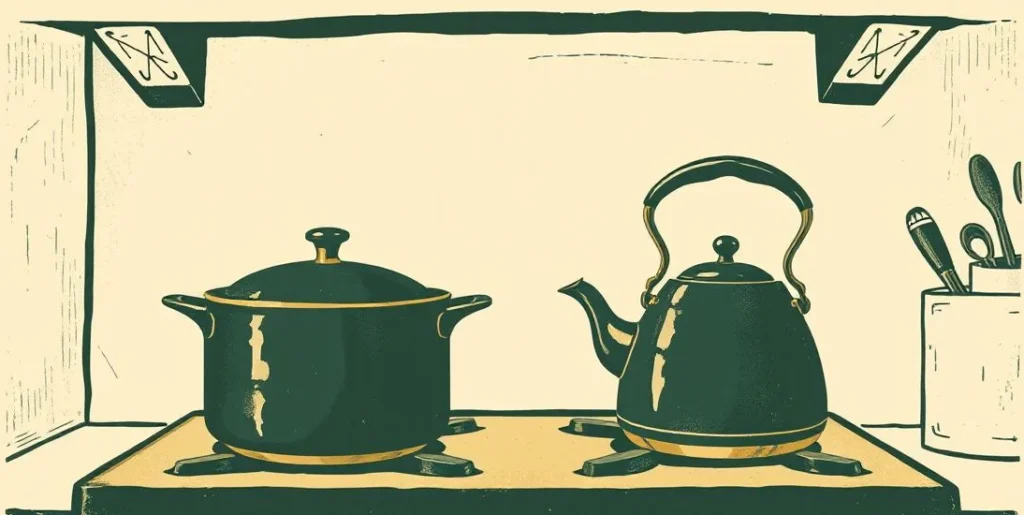
Someone who accuses you of what they do themselves is usually called a hypocrite, and what they are doing is often called projecting (pinning their own fault on you). The classic idiom is “the pot calling the kettle black”, and the quick reply is “Look who’s talking!” Which word fits best depends on whether you mean the person, the behaviour, or a comeback in the moment.
Below are the words grouped by use, each with a sentence, then the idioms, the more technical terms people search for (projection, DARVO, tu quoque), words that are often misused here, how to respond, and a short practice.
Quick picker
| You want to… | Use | Example |
|---|---|---|
| name the person | hypocrite | “He’s a hypocrite: he calls me lazy and hasn’t cleaned the kitchen in months.” |
| describe the act | projecting, projection | “She keeps calling me jealous. I think she’s projecting.” |
| say it with an idiom | the pot calling the kettle black | “Him calling me rude? That’s the pot calling the kettle black.” |
| reply on the spot | Look who’s talking! | “You’re always on your phone.” “Look who’s talking!” |
| describe the unfairness | a double standard | “It’s a double standard: when I’m late it’s a problem, when he’s late it’s traffic.” |
| sound neutral, at work | holds others to a standard they don’t meet | “The manager holds the team to deadlines he doesn’t keep himself.” |
| describe a pattern in a relationship | blame-shifting, DARVO | “Every argument ends with blame-shifting: suddenly it’s my fault.” |
Words for the person
- hypocrite – the standard word for someone who criticises others for what they do themselves. “He lectures everyone about honesty and lied on his CV. What a hypocrite.”
- hypocritical (adjective) – “It’s hypocritical to accuse me of overspending when you bought a new car.”
- a fine one to talk (British, informal) – “You’re a fine one to talk about being on time.”
- sanctimonious / self-righteous – when the accusation comes with a superior, moralising tone. “A sanctimonious speech about loyalty from the man who leaked the memo.”
- holier-than-thou – acting morally superior. “Her holier-than-thou attitude is hard to take when she does exactly the same.”
- double-standard (as an adjective) – “double-standard parenting”
For people who push their mistakes onto others more generally, see words for someone who blames others; for people who never own up, see words for someone who won’t admit they are wrong.
Words for what they are doing
- projecting / projection – seeing your own faults in someone else and accusing them of it. In everyday speech it is often used loosely: “You’re projecting.” In psychology, projection is a defence mechanism first described in psychoanalysis; calling someone’s behaviour projection is an interpretation, not a diagnosis.
- blame-shifting – pushing responsibility onto someone else. “When the report was late, it was blame-shifting all round.”
- deflecting – turning attention away from their own behaviour. “Every time I mention the money, he deflects by accusing me of hiding things.”
- turning the tables – reversing the situation so the accuser becomes the accused. “I raised the problem, and she turned the tables on me.”
- flipping the script (informal) – the same idea. “He flipped the script and made it about my tone.”
- double standard – one rule for them, another for you. “There’s a clear double standard in this office.”
- hypocrisy – the noun. “The hypocrisy is that she does the very thing she complains about.”
- a guilty conscience – a reason people sometimes accuse others first. “Why so quick to accuse me? Guilty conscience?”
Idioms and sayings
| Idiom | Meaning | Example |
|---|---|---|
| the pot calling the kettle black | criticising someone for a fault you share | “A chronic interrupter telling me I interrupt? Pot, kettle.” |
| look who’s talking | a reply: “you do that too” | “You never tidy up.” “Look who’s talking.” |
| takes one to know one | a playful or childish reply: “you’d know, because you’re the same” | “You’re such a show-off.” “Takes one to know one.” |
| people who live in glass houses shouldn’t throw stones | don’t criticise others for faults you have | “Before you complain about his spending, remember: glass houses.” |
| practise what you preach | do what you tell others to do | “If honesty matters so much, practise what you preach.” |
| do as I say, not as I do | someone who sets rules they ignore (often said ironically) | “Phones away at dinner, says Dad, scrolling. Do as I say, not as I do.” |
| the mote and the beam / a speck in your brother’s eye | noticing a small fault in others while ignoring your own big one (from the Gospels, Matthew 7:3-5) | “He’s picking at the speck in my eye and ignoring the plank in his own.” |
| physician, heal thyself | fix your own problem before advising others (also from the Gospels, Luke 4:23) | “A burnt-out manager running a wellbeing workshop? Physician, heal thyself.” |
| you’re a fine one to talk | you have no right to criticise this | “You’re a fine one to talk about being late.” |
“The pot calling the kettle black” goes back to the days of cooking over open fires, when both the pot and the kettle were blackened by soot; it has been recorded in English since the 1600s. Short forms are common: “Pot, meet kettle” or just “Pot, kettle.”
Other proverbs sometimes listed for this, such as “two wrongs don’t make a right” or “a wolf in sheep’s clothing”, mean something different: the first is about revenge, the second about a hidden threat.
Terms you may have seen online
- DARVO – Deny, Attack, Reverse Victim and Offender. A term from psychologist Jennifer Freyd’s research for a pattern in which someone confronted with their behaviour denies it, attacks the person raising it and presents themselves as the real victim. “When I asked about the messages, it was pure DARVO: he denied it, called me paranoid, and then said I was the one hurting him.”
- tu quoque (Latin, “you too”) – the logical fallacy of answering a criticism with “but you do it too”. Note the direction: it describes the person replying, not the accuser. A point can be true even when the person making it is a hypocrite.
- whataboutism – changing the subject to someone else’s wrongdoing (“What about when you…?”), especially in politics. Close to tu quoque.
- gaslighting – often confused with this. Gaslighting means making someone doubt their own memory or perception (“That never happened, you’re imagining it”). Accusing you of their own behaviour can be part of it, but the two words are not interchangeable.
Formal and neutral ways to say it
At work, in a complaint or in an essay, name the inconsistency without name-calling:
- “He criticises the team for missing deadlines that he regularly misses himself.”
- “She holds others to standards she does not meet.”
- “The criticism is inconsistent with his own conduct.”
- “There is a contradiction between what the company asks of staff and what its directors do.”
- “The accusation applies at least as much to the accuser.”
- “This appears to be a case of applying a double standard.”
These are easier to defend than “hypocrite”, because they describe behaviour rather than character.
Choosing by situation
| Situation | Natural choice |
|---|---|
| A friend teasing you about something they do too | “Look who’s talking!” / “Pot, kettle.” |
| A partner who accuses you of cheating, lying or jealousy while doing it | projecting; blame-shifting; in a repeated pattern, DARVO |
| A boss or colleague | “holds others to a standard they don’t meet”; double standard |
| A politician or public figure | hypocrisy; hypocritical; “practise what you preach” |
| A parent or teacher | “do as I say, not as I do” |
| Writing an essay or review | inconsistent; contradicts; applies a double standard |
Hypocrisy, projection, double standard: the difference
| Word | What it focuses on | Does the person know? | Example |
|---|---|---|---|
| hypocrisy | criticising others for what you do | often, but not always | “He condemns gossip and gossips daily.” |
| projection | seeing your own fault or feeling in someone else | usually not; that is the point of the word | “She’s anxious, so she keeps saying everyone else is on edge.” |
| double standard | one rule for one person or group, another for others | may or may not | “Boys can stay out late, girls can’t.” |
| blame-shifting | moving responsibility for a specific problem | usually yes | “The project failed, and he blamed the intern.” |
| deflecting | changing the subject to avoid a question | usually yes | “Ask about the money and she talks about your mother.” |
So “hypocrite” judges the person’s consistency, “projecting” guesses at what is going on inside them, and “double standard” describes the rule itself. If you are not sure what someone is thinking, “hypocritical” or “double standard” is safer than “projecting”.
Sentences for real situations
With family:
- “Mum tells me to stop shouting, at the top of her voice. Talk about the pot calling the kettle black.”
- “My brother calls me spoiled, and he still has his laundry done for him.”
With friends:
- “You’re calling me flaky? You cancelled twice this month. Look who’s talking.”
- “She says I always make it about myself, then talks about her week for an hour.”
In a relationship:
- “He accuses me of lying every time he’s been less than honest himself. I think he’s projecting.”
- “Every time I bring up a problem, it gets turned around until I’m the one apologising.”
At work:
- “The director asked us to cut travel costs and flew business class to the same meeting.”
- “I was told my emails are too blunt by someone who replies in one word.”
In the news or an essay:
- “Critics accused the minister of hypocrisy after the rules he announced were broken at his own office.”
- “The company’s call for transparency sits uneasily with its refusal to publish its own figures.”
How to respond to someone who does this
The words above name the problem; they do not settle the argument. A few phrases that keep the conversation on track:
- Point to the pattern, calmly: “You’ve said I’m not listening. I’d like us both to listen; you interrupted me twice just now.”
- Separate the issues: “We can talk about my spending, and then about yours.”
- Refuse the swap: “I’m not going to defend myself against that while the original question is unanswered.”
- Stick to facts: “On Tuesday you were forty minutes late; I wasn’t late this week.”
- Admit what’s true: if the accusation is partly fair, saying so (“Yes, I was late, and so were you”) takes the heat out of it. Answering only with “you too” is the tu quoque trap.
Comebacks, from gentle to sharp:
- “Funny, I was going to say the same about you.” (light, smiling)
- “Pot, meet kettle.” (playful, among friends)
- “Look who’s talking.” (direct, informal)
- “You’re a fine one to talk.” (British, a little sharper)
- “Are we talking about me, or about you?” (calm, makes them pause)
- “I’ll take that seriously when you do the same.” (firm)
- “That’s quite a double standard.” (pointed but not personal)
- “Practise what you preach.” (blunt)
The gentler lines work best when you want to keep the relationship; the sharper ones close the conversation, which is sometimes what you want and sometimes not.
If the behaviour is a lasting pattern in a relationship and leaves you doubting yourself, it can help to talk it over with someone you trust or a counsellor.
Words that are easy to misuse
- Gaslighting is not a synonym for hypocrisy (see above).
- Narcissist is a personality label, and narcissistic personality disorder is a clinical diagnosis. Accusing others of your own faults does not make someone one.
- “Hoist with his own petard” means harmed by your own plan, not accusing others.
- “Takes one to know one” sounds childish in serious arguments; use it with friends, not in a meeting.
- “Tu quoque” describes the reply, not the accuser.
- Spelling: hypocrite (person), hypocrisy (the thing), hypocritical (adjective). Not “hypocrit” or “hypocracy”.
Practice
Choose the best word or phrase.
- Your brother, who never washes up, tells you that you never wash up. A quick reply: ______. (Look who’s talking / Physician, heal thyself / tu quoque)
- A noun for one rule for them and another for you: ______. (a double standard / gaslighting / a guilty conscience)
- “She keeps calling me controlling, but she checks my phone every night. I think she’s ______.” (projecting / deflecting the kettle / holier-than-thou)
- A neutral way to write it in a complaint: “The manager ______.”
- Which term describes the person who answers “but you do it too”? (hypocrite / tu quoque / DARVO)
- Fix the spelling: “His hypocracy is obvious; he’s a real hypocrit.”
Answers: 1 Look who’s talking; 2 a double standard; 3 projecting; 4 for example “holds staff to deadlines he does not meet himself”; 5 tu quoque; 6 hypocrisy, hypocrite.
Quick answers
What do you call someone who accuses you of what they are doing? A hypocrite. The behaviour is often called projecting, and the idiom is “the pot calling the kettle black”.
What is it called when someone accuses you of cheating while they cheat? In everyday speech, projection. In a repeated pattern where they deny, attack and claim to be the victim, some people use the term DARVO.
What is a word for someone who blames others for what they do? Blame-shifter, or say that they deflect or shift the blame.
Is it gaslighting to accuse someone of what you’re doing? Not by itself. Gaslighting is making someone doubt their own memory or judgement; accusing them of your own behaviour can be one part of it.
What is the opposite of a hypocrite? Someone who practises what they preach, or who walks the talk. Adjectives: consistent, principled, sincere. “She’s one of the few managers who actually follows her own rules.”
Is calling someone a hypocrite rude? It is a strong word, because it judges their character. In a calm conversation or at work, describing the behaviour (“you asked me not to do that, and you did it yesterday”) usually gets a better hearing than the label.
What does “pot, kettle” mean in a text? It is short for “the pot calling the kettle black”: you are accusing me of something you do yourself.
More words for difficult behaviour: idioms for lying, someone who likes to cause conflict and someone who uses people. For how idioms and other figures of speech work, see figurative language.