
On this page9 sections
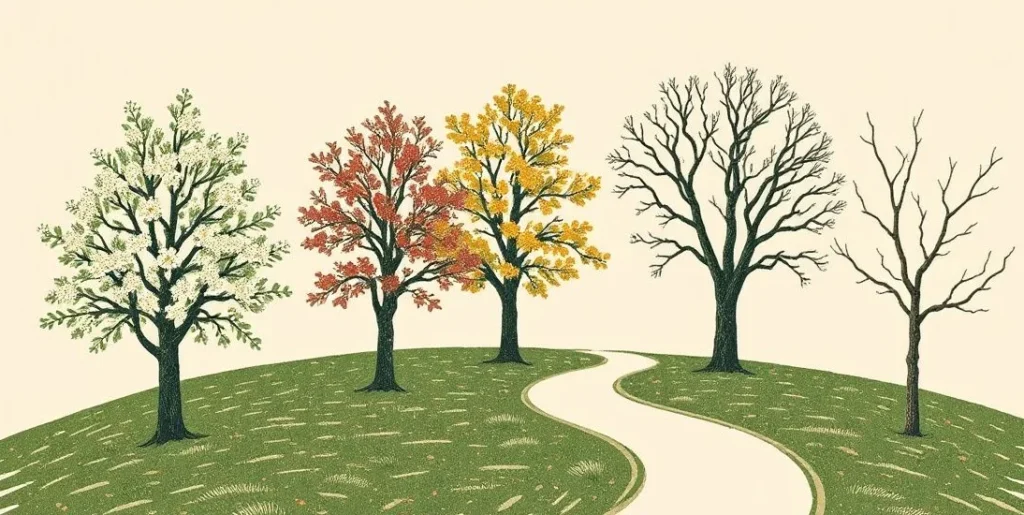
Similes for life compare the whole of a person’s existence to something easier to picture: a journey with turns, a book with chapters, a year with seasons, a game with rules and luck. Each image carries its own idea. A journey stresses direction and progress, a book stresses stages and memory, the seasons stress change and aging, and a game stresses chance and choice.
These comparisons show up in graduation and wedding speeches, eulogies, journal entries, poems, and advice to someone at a turning point. Choose the image that fits the point you want to make, and stay with it rather than switching between several in the same paragraph.
Definition of Simile
A simile is a figure of speech that compares two unlike things using the words “like” or “as.” Similes are used to create vivid imagery, emphasize a particular quality, or make a description more relatable. The purpose of a simile is to enhance understanding by drawing a comparison between something familiar and something less familiar. They add color and depth to writing and speech, making them more engaging and memorable.
Similes are different from metaphors, which directly equate two things without using “like” or “as.” For example, “He is like a lion” is a simile, while “He is a lion” is a metaphor. Similes provide a gentler, more indirect comparison, allowing the reader or listener to draw their own connections and interpretations. They function as a bridge, connecting different concepts and enhancing comprehension.
In essence, a simile is a tool for enriching language by creating a mental picture through comparison. It is a fundamental element of figurative language, contributing to the expressiveness and artistry of communication.
Classification of Similes
Similes can be classified based on the type of comparison they make and the effect they create. Some similes are straightforward and literal, while others are more imaginative and evocative. Understanding these classifications can help you choose the most appropriate simile for your intended purpose.
- Descriptive Similes: These similes focus on describing a particular characteristic or quality. For example, “The snow was as white as cotton.”
- Emphatic Similes: These similes are used to emphasize a point or create a stronger impact. For example, “He was as stubborn as a mule.”
- Humorous Similes: These similes are intended to be funny or ironic. For example, “He was about as useful as a screen door on a submarine.”
- Poetic Similes: These similes are often used in poetry and literature to create vivid imagery and evoke emotions. For example, “Her smile was like sunshine after the rain.”
Function of Similes
The primary function of a simile is to enhance understanding and create vivid imagery. Similes help to explain complex or abstract concepts by relating them to something more familiar. They also add emotional depth and impact to writing and speech. By drawing comparisons, similes can evoke specific feelings or associations in the reader or listener.
Moreover, similes can make writing more engaging and memorable. A well-crafted simile can capture the reader’s attention and leave a lasting impression. They are a valuable tool for writers and speakers who want to communicate effectively and persuasively.
Contexts for Similes
Similes are used in a wide range of contexts, from everyday conversations to formal writing. They are common in literature, poetry, journalism, and advertising. The specific context will often determine the type of simile that is most appropriate. For example, a formal essay might require more precise and descriptive similes, while a poem might call for more imaginative and evocative comparisons.
In informal contexts, similes can add humor and personality to conversations. They can also be used to explain things more clearly. In professional settings, similes can help to make presentations and reports more engaging and memorable.
Structural Breakdown of Similes
A simile typically consists of three main components: the subject, the linking word (“like” or “as”), and the object of comparison. Understanding these components is crucial for constructing effective similes.
- Subject: The thing being described or compared. This is the focal point of the simile.
- Linking Word: The word “like” or “as” that connects the subject to the object of comparison. This word indicates that a comparison is being made.
- Object of Comparison: The thing to which the subject is being compared. This object should share a common characteristic with the subject.
The basic formula for a simile is: Subject + Linking Word + Object of Comparison.
For example, in the simile “Her eyes were like stars,” “Her eyes” is the subject, “like” is the linking word, and “stars” is the object of comparison. The comparison highlights the brightness and sparkle of her eyes.
Common Simile Patterns
While the basic structure of a simile is straightforward, there are several common patterns that writers and speakers use to create more nuanced and effective comparisons.
- As + Adjective + As: This pattern is used to compare a quality or characteristic. For example, “as brave as a lion” or “as cold as ice.”
- Like + Noun: This pattern is used to compare two things directly. For example, “He runs like the wind” or “She sings like an angel.”
- Verb + Like + Noun: This pattern is used to compare an action or behavior. For example, “He eats like a horse” or “She sleeps like a log.”
Understanding these patterns can help you to create a wider range of similes and express yourself more effectively.
Rules for Effective Simile Construction
To construct effective similes, it’s important to follow a few key rules:
- Choose a Relevant Comparison: The object of comparison should share a relevant characteristic with the subject. The comparison should make sense and enhance understanding.
- Avoid Clichés: While some common similes are effective, overusing clichés can make your writing seem unoriginal. Try to come up with fresh and creative comparisons.
- Be Clear and Concise: A good simile should be easy to understand. Avoid using overly complex or obscure comparisons.
- Consider Your Audience: The effectiveness of a simile can depend on the knowledge and experience of your audience. Choose comparisons that are likely to resonate with them.
Types of Similes
Similes can be categorized based on their purpose, style, and the nature of the comparison they make. Understanding these different types can help you choose the most appropriate simile for your specific needs.
Descriptive Similes
Descriptive similes are used to provide a vivid description of a person, place, or thing. They focus on highlighting specific qualities or characteristics through comparison. These similes are often used in descriptive writing to create a strong sense of imagery.
For example, “The sky was as blue as the ocean” is a descriptive simile that paints a clear picture of the sky’s color.
Exaggerative Similes
Exaggerative similes, also known as hyperbole similes, use extreme comparisons to emphasize a point or create a humorous effect. These similes often involve a degree of exaggeration that is not meant to be taken literally.
For example, “He was as hungry as a bear” is an exaggerative simile that emphasizes the person’s extreme hunger.
Ironic Similes
Ironic similes are used to convey a meaning that is the opposite of the literal meaning. These similes often involve a humorous or sarcastic tone. The comparison is used to highlight a contrast or contradiction.
For example, “He was as graceful as a bull in a china shop” is an ironic simile that suggests the person is clumsy rather than graceful.
Poetic Similes
Poetic similes are often used in poetry and literature to create vivid imagery and evoke emotions. These similes tend to be more imaginative and evocative than other types of similes. They are carefully crafted to create a specific mood or atmosphere.
For example, “Her voice was like a gentle breeze” is a poetic simile that suggests the softness and pleasantness of her voice.
Examples of Similes About Life
The tables below group similes about life by the image they use. The explanation shows what each comparison suggests about how life works.
Life as a Journey
Travel similes present life as movement from one place to another, with choices, detours, and companions along the way.
| Simile | Explanation |
|---|---|
| Life is like a journey. | Compares life to travel, with a starting point, stops along the way, and changes of direction. |
| Life is like a long road with many turns. | Compares life’s surprises to bends you cannot see around until you reach them. |
| Life is like a river, always moving forward. | Compares the passing of time to water that only flows one way. |
| Life is like a train ride; people get on and off at different stations. | Compares the people who enter and leave your life to fellow passengers. |
| Life is like climbing a mountain. | Compares the effort of reaching a goal to a hard climb with a rewarding view. |
| Life is like a maze. | Compares life’s choices to paths that sometimes lead to dead ends. |
| Life is like sailing; you can’t control the wind, but you can adjust the sails. | Compares life to a voyage where you respond to events you cannot control. |
| Life is like a hike without a map. | Compares life to finding your own way without clear directions. |
| Life is like a relay race. | Compares one generation passing values and duties to the next to runners handing off a baton. |
| Life is like a marathon, not a sprint. | Compares life to a long race that rewards steady pacing over quick bursts. |
Life as a Story or a Work of Art
These similes treat life as something written, performed, or made, with parts, roles, and room for revision.
| Simile | Explanation |
|---|---|
| Life is like a book, and each year is a new chapter. | Compares the stages of life to chapters that each tell part of the story. |
| Life is like a story that is still being written. | Compares the future to pages not yet filled in. |
| Life is like a play where everyone has a part. | Compares people to actors who each play different roles. |
| Life is like a movie with no rehearsal. | Compares life to a film shot in one take, so each moment happens only once. |
| Life is like a diary that fills one page at a time. | Compares daily living to a record that grows slowly, day by day. |
| Life is like a song with fast parts and slow parts. | Compares busy and quiet periods of life to changes in a song’s tempo. |
| Life is like a photo album. | Compares a lifetime to a collection of saved memories. |
| Life is like a quilt made of many pieces. | Compares varied experiences to scraps of fabric stitched into one whole. |
| Life is like a painting you add to every day. | Compares daily choices to brushstrokes that slowly build a picture. |
| Life is like a draft you can revise. | Compares mistakes to errors on a page that can be fixed in the next version. |
Life and the Seasons of Nature
Nature similes tie life to growth, weather, and the passing of time. They suit writing about aging, loss, and renewal.
| Simile | Explanation |
|---|---|
| Life is like the four seasons. | Compares childhood, youth, middle age, and old age to spring, summer, fall, and winter. |
| Life is like a garden; you reap what you plant. | Compares actions to seeds whose results show up later. |
| Life is like a tree adding rings. | Compares the passing years to growth rings that build up over time. |
| Life is like the weather, sunny one day and stormy the next. | Compares good and bad times to changing weather. |
| Life is like a candle. | Compares life to a flame that gives light and slowly burns down. |
| Life is like a flower that blooms and fades. | Compares life’s beauty and shortness to a flower’s brief bloom. |
| Life is like the tide, coming in and going out. | Compares life’s highs and lows to the regular rise and fall of the sea. |
| Life is as short as a summer afternoon. | Compares the length of a life to a pleasant stretch of time that ends too soon. |
| Life is as brief as morning dew. | Compares life to dew that disappears once the sun is up. |
| Hard times in life are like winter; spring always follows. | Compares difficult periods to a cold season that eventually gives way to growth. |
Life as a Game or a Ride
These similes focus on luck, strategy, and ups and downs. They fit writing about risk, choices, and unexpected turns.
| Simile | Explanation |
|---|---|
| Life is like a roller coaster. | Compares life’s thrilling highs and frightening lows to a fast, bumpy ride. |
| Life is like a game of cards; you play the hand you’re dealt. | Compares circumstances you did not choose to cards you must make the best of. |
| Life is like a box of chocolates. | Compares life’s surprises to candies whose fillings you can’t see; the line was made famous by the 1994 film Forrest Gump. |
| Life is like a game of chess. | Compares life to a game where thinking ahead pays off. |
| Life is like a puzzle. | Compares life to scattered pieces that only make sense once they fit together. |
| Life is like a kaleidoscope. | Compares life to a toy where a small turn changes the whole picture. |
| Life is like a seesaw. | Compares life to a constant effort to keep things in balance. |
| Life is like a school where lessons repeat until you learn them. | Compares recurring problems to lessons that keep coming back. |
| Life is like a balancing act. | Compares juggling work, family, and health to a performer keeping their balance. |
| Life is like a roll of the dice. | Compares the role of chance in life to the unpredictable result of throwing dice. |
Usage Rules for Similes
Using similes effectively requires understanding the rules that govern their construction and application. These rules ensure that your similes are clear, relevant, and impactful.
Relevance of Comparison
The most important rule for using similes is to ensure that the comparison is relevant. The object of comparison should share a characteristic with the subject that is being highlighted. If the comparison is arbitrary or nonsensical, the simile will not be effective.
Correct: “Her voice was as smooth as silk.” (Both the voice and silk share the quality of smoothness.)
Incorrect: “Her voice was as smooth as a rock.” (There is no obvious shared quality between a voice and a rock.)
Avoiding Clichés
While some common similes can be effective, overusing clichés can make your writing seem unoriginal and predictable. Try to come up with fresh and creative comparisons that will surprise and engage your audience.
Cliché: “As busy as a bee.”
Original: “As busy as a programmer debugging code.”
Clarity and Conciseness
A good simile should be easy to understand. Avoid using overly complex or obscure comparisons that will confuse your audience. The simile should be clear and concise, conveying its meaning in a straightforward manner.
Clear: “The explanation was as clear as day.”
Unclear: “The explanation was as clear as a quantum entanglement.”
Considering Your Audience
The effectiveness of a simile can depend on the knowledge and experience of your audience. Choose comparisons that are likely to resonate with them and that they will understand. Avoid using references that are too obscure or culturally specific.
Appropriate for a general audience: “The car was as fast as a racehorse.”
Inappropriate for a general audience: “The car was as fast as a Bugatti Veyron.” (This comparison may not be meaningful to those unfamiliar with cars.)
Maintaining Consistency
Ensure that the simile aligns with the tone and style of your writing. A humorous simile may be out of place in a serious or formal context. Choose similes that are consistent with the overall message you are trying to convey.
Appropriate in a lighthearted context: “He was as clumsy as a penguin on roller skates.”
Inappropriate in a formal context: “He presented the data with the grace of a toddler learning to walk.”
Common Mistakes with Similes
Even experienced writers and speakers can make mistakes when using similes. Recognizing these common errors and learning how to avoid them can help you to improve the quality of your similes.
Mixing Similes and Metaphors
One common mistake is to inadvertently mix similes and metaphors. While both figures of speech involve comparison, they use different structures. Mixing them can create confusion and weaken the impact of your writing.
Incorrect: “He was like a lion, the king of the jungle.” (This starts as a simile but ends as a metaphor.)
Correct: “He was like a lion, brave and fearless.” (This is a consistent simile.)
Using Unrelated Comparisons
Another common mistake is to use comparisons that are not logically related. The object of comparison should share a clear and relevant characteristic with the subject. If the comparison is arbitrary or nonsensical, it will not be effective.
Incorrect: “The book was as heavy as a cloud.” (There is no clear shared quality between a book and a cloud.)
Correct: “The book was as heavy as a brick.” (Both the book and a brick share the quality of heaviness.)
Overusing Similes
While similes can add color and depth to your writing, overusing them can make your writing seem forced and artificial. Use similes sparingly and only when they enhance the meaning and impact of your message.
Overuse: “The sky was as blue as the ocean, and the clouds were as white as cotton, and the sun was as hot as fire.”
Better: “The sky was a brilliant blue, and the clouds drifted lazily overhead.”
Using Offensive Comparisons
Avoid using similes that are offensive or discriminatory. Comparisons that rely on stereotypes or that denigrate individuals or groups can be harmful and inappropriate. Be mindful of the potential impact of your words and choose comparisons that are respectful and inclusive.
Offensive: “He was as lazy as [derogatory term].”
Respectful: “He was as relaxed as someone on vacation.”
Practice Exercises
These exercises will help you to practice identifying, constructing, and using similes effectively. Each exercise includes a set of questions and answers to help you assess your understanding.
Exercise 1: Identifying Similes
Identify the similes in the following sentences.
| Question | Answer |
|---|---|
| 1. Her smile was like sunshine. | like sunshine |
| 2. The car was as fast as a rocket. | as fast as a rocket |
| 3. He is a lion in battle. | (This is a metaphor, not a simile) |
| 4. The snow fell like feathers. | like feathers |
| 5. She sings like an angel. | like an angel |
| 6. The old house stood silent, a sentinel of time. | (This is a metaphor, not a simile) |
| 7. The baby slept as soundly as a log. | as soundly as a log |
| 8. His words were like a soothing balm. | like a soothing balm |
| 9. The city was a jungle of concrete and steel. | (This is a metaphor, not a simile) |
| 10. He eats like a horse. | like a horse |
Exercise 2: Completing Similes
Complete the following similes by adding an appropriate object of comparison.
| Question | Answer |
|---|---|
| 1. He was as quiet as a __________. | mouse |
| 2. She was as bright as a __________. | star |
| 3. The coffee was as hot as __________. | lava |
| 4. The joke was as dry as __________. | sand |
| 5. The pain was like a __________. | knife |
| 6. This task is as easy as __________. | pie |
| 7. The fabric felt as soft as __________. | silk |
| 8. The wind cut through him like a __________. | blade |
| 9. The secret was as safe as __________. | a vault |
| 10. The athlete runs as swiftly as __________. | a cheetah |
Exercise 3: Constructing Similes
Create your own similes to describe the following subjects.
| Subject | Possible Simile |
|---|---|
| 1. A crowded room | The room was as packed as a can of sardines. |
| 2. A difficult task | The task was like climbing Mount Everest. |
| 3. A beautiful sunset | The sunset was as vibrant as a painting. |
| 4. A strong friendship | Their friendship was as solid as a rock. |
| 5. A peaceful morning | The morning was as tranquil as a still lake. |
| 6. A sudden storm | The storm arrived as suddenly as a thief in the night. |
| 7. A wise old man | He was as wise as an ancient sage. |
| 8. A catchy song | The song was as addictive as sugar. |
| 9. A heartfelt apology | The apology was as sincere as a confession. |
| 10. A daunting challenge | The challenge loomed like a giant shadow. |
Advanced Topics in Similes
There are several more complex aspects of similes to explore. These topics delve into the nuances of simile construction and usage, allowing you to refine your skills and create more sophisticated comparisons.
Extended Similes
An extended simile is a simile that is developed over several lines or paragraphs. It involves a more detailed and elaborate comparison, exploring multiple aspects of the subject and object of comparison. Extended similes are often used in poetry and literature to create a richer and more immersive experience for the reader.
Example: “Life is like a garden: it requires constant care and attention. You must plant the seeds of your dreams, water them with hard work, and protect them from the weeds of negativity. Only then will you be able to harvest the fruits of your labor and enjoy the beauty of your creation.”
Subverted Similes
A subverted simile is a simile that intentionally defies expectations or conventions. It involves a comparison that is unexpected or unconventional, often used to create humor or irony. Subverted similes can challenge the reader’s assumptions and offer a fresh perspective on the subject.
Example: “He was as organized as a teenager’s bedroom.” (This subverts the expectation that organization is a positive trait.)
Complex Similes
Complex similes involve multiple comparisons or layers of meaning. They may use more sophisticated language and imagery, requiring the reader to engage more deeply with the text. Complex similes are often used in advanced writing to convey subtle nuances and create a more profound impact.
Example: “Her love was like a labyrinth, full of twists and turns, dead ends and hidden passages, but ultimately leading to a central chamber of warmth and understanding.”
Frequently Asked Questions (FAQ)
Here are some frequently asked questions about similes, along with detailed answers to help you deepen your understanding.
- What is the difference between a simile and a metaphor?
A simile compares two unlike things using “like” or “as,” while a metaphor directly equates two things without using these words. A simile is a gentler, more indirect comparison, while a metaphor is a stronger, more direct comparison. For example, “He is like a lion” (simile) vs. “He is a lion” (metaphor).
- Can a simile be a cliché?
Yes, a simile can be a cliché if it is overused and lacks originality. Clichés are common expressions that have lost their impact due to overuse. To avoid clichés, try to come up with fresh and creative comparisons that will surprise and engage your audience.
- How can I make my similes more effective?
To make your similes more effective, ensure that the comparison is relevant, avoid clichés, be clear and concise, consider your audience, and maintain consistency with the tone and style of your writing. Use similes sparingly and only when they enhance the meaning and impact of your message.
- Are similes only used in writing?
No, similes are used in both writing and speaking. They
are a common feature of everyday conversation as well as more formal types of communication. Whether you’re describing something to a friend or giving a presentation at work, similes can help you make your message more engaging and memorable. - How do similes enhance understanding?
Similes enhance understanding by relating unfamiliar concepts to familiar ones. By drawing a comparison between two things, similes can help people grasp new ideas or see things from a different perspective. They create a bridge between the known and the unknown, making complex information more accessible and relatable.